Efficient deep learning for vision & language.
I develop efficient, low-resource methods and architectures that lean on well-defined structure, not scale, across vision and language.
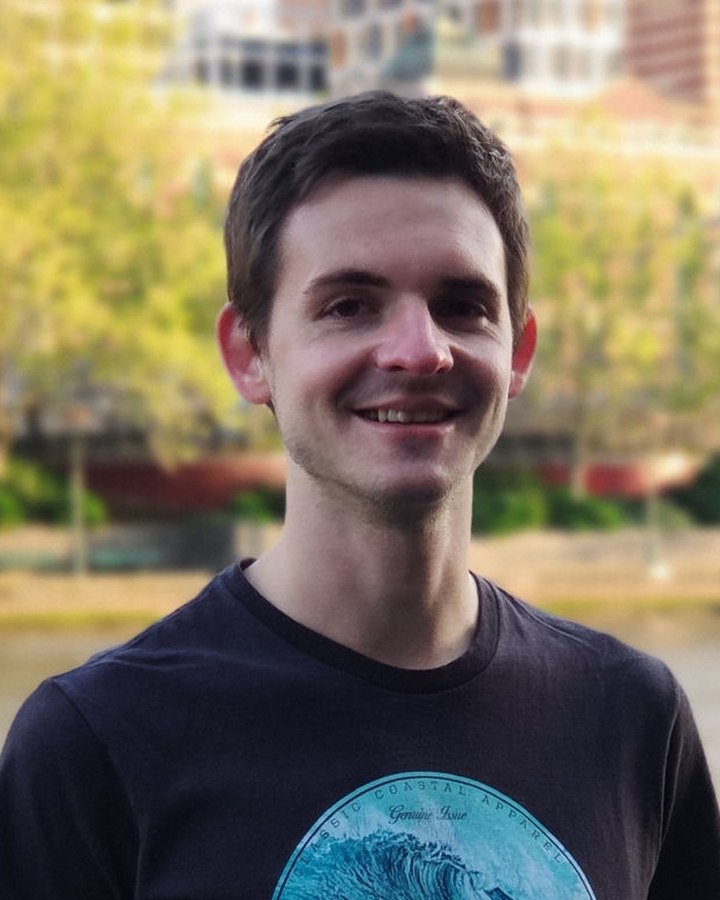 Melbourne, Australia
Doing more with less.
I'm a Research Fellow in Artificial Intelligence at The University of Melbourne, where I also completed my PhD on improving the efficiency of deep visual representation learning under Prof. Tom Drummond, Dr. Krista A. Ehinger, and A/Prof. Mehrtash Harandi.
My work sits at the intersection of efficient and low-resource deep learning and its applications, spanning efficient neural architectures, few-shot and low-data learning, the geometry of optimisation, and retrieval- and memory-integrated generative modelling across vision and language. Where possible, I prefer to build on well-defined structure rather than scale. Through doctoral co-supervision, my research also extends to diffusion-based medical image generation and 3D reconstruction.
Published contributions have appeared at venues including NeurIPS, TPAMI, ICLR, and ICML. Before my PhD, I worked on robotics, SLAM, and computer vision in Germany, in close collaboration with industry partners.
Four threads, one theme: efficiency.
From how models are built to how they learn and where they apply, the common thread is a preference for well-defined structure over scale.
Publications, up close.
Filter by area or venue. Click any card for a TL;DR, a short summary, and links.
Where I've worked.
Research Fellow in AI
Retrieval- and memory-integrated generative modelling, efficient hybrid state-space / Transformer architectures, geometry-inspired optimisation, and continual learning across vision and language. Co-supervising two PhD candidates.
Graduate Researcher (PhD Candidate)
Efficient attention architectures, few-shot and low-data image classification, better-conditioned meta-learning, and Transformer-based multi-object tracking.
Research & Teaching Associate
Led environment-perception and navigation research in FORobotics (8 academic + 20 industry partners); semantic mapping, SLAM, and direct industry collaboration. Co-led the institute's Robotics Lab.
Software Engineer (Competition & Internship)
Computer vision for autonomous low-speed driving, winning the Audi Autonomous Driving Cup with team FAUtonOHM.
Awards & peer review.
- 2026Gold Reviewer, ICML
- 2026Selected for the Machine Learning Summer School (MLSS), Melbourne
- 2024Outstanding Reviewer, ICLR · Best Reviewer, ICML
- 2023Top Reviewer, NeurIPS
- 2021–25Melbourne Research Scholarship (full PhD scholarship)
- 2016Winner, Audi Autonomous Driving Cup (€10,000)
Conference reviewing
NeurIPS (since 2022), ICLR (since 2023), ICML (since 2023), IROS (2019–2022), ACCV (2022).
Journal reviewing
IEEE TPAMI (since 2023), TMLR (since 2026), IEEE RA-L (2022).
Volunteering
EACL (2023).